Their Last Motion
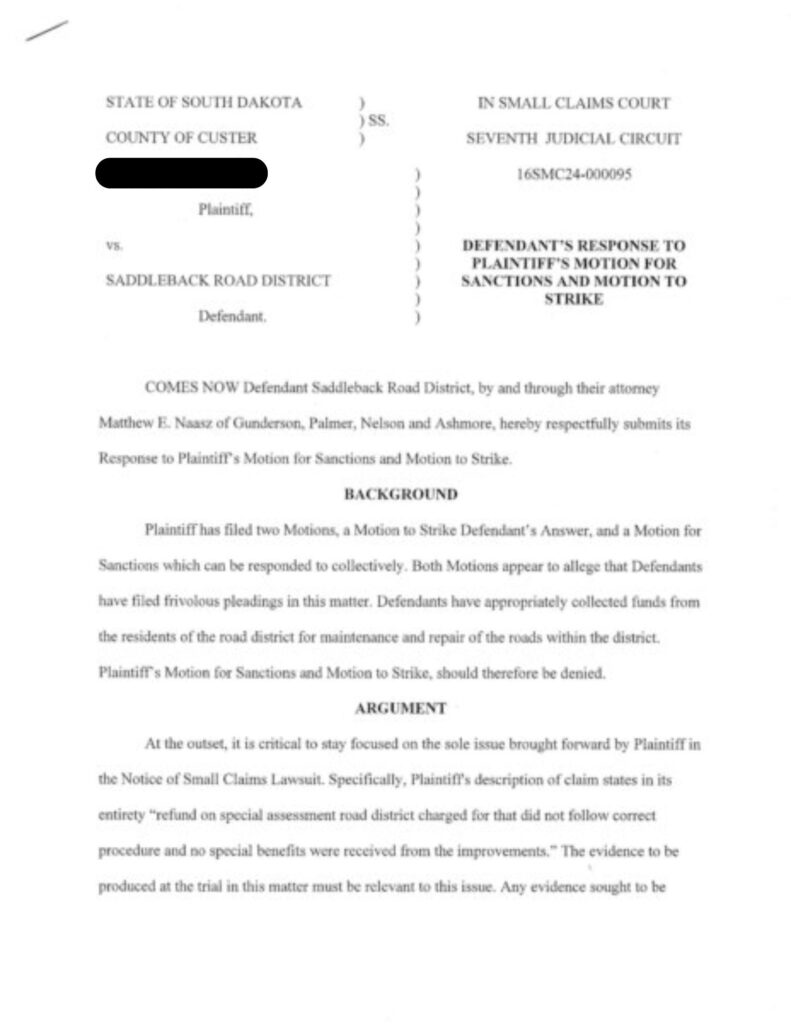
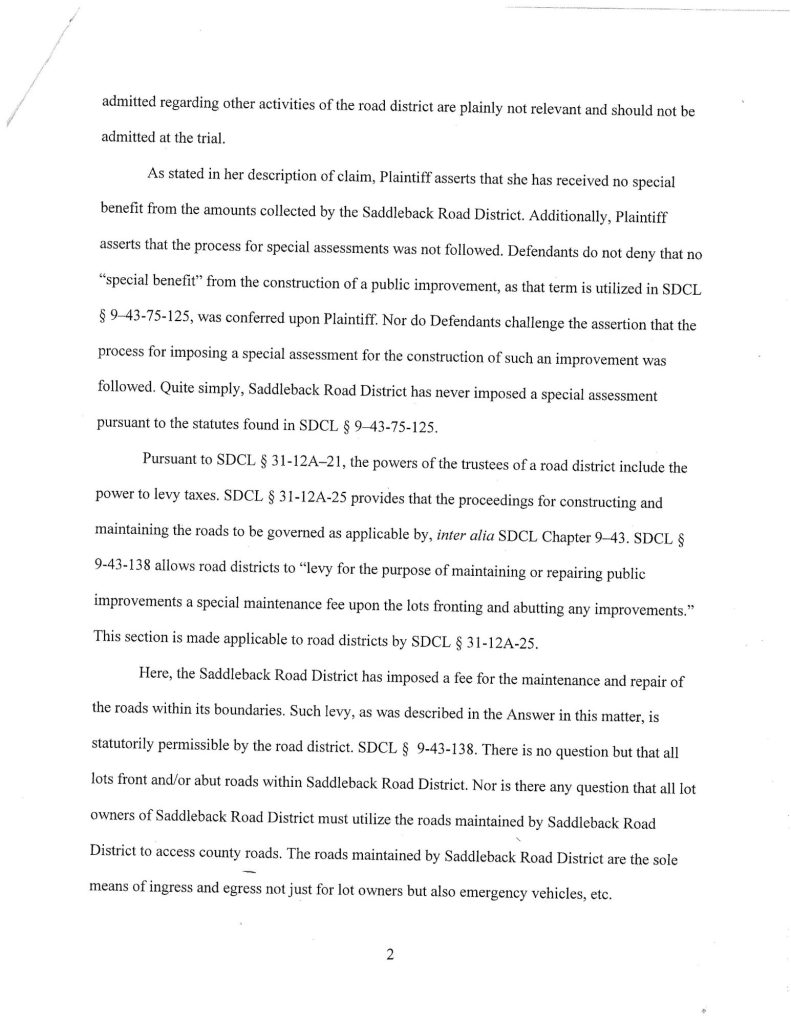
Something I got a chuckle out of was where the lawyer (or more likely his paralegal) says that we should stay focused on the real issue here. That we should not discuss anything but the actual complaint. Are you serious? Did you write that with a straight face? 5 months of fending off utterly frivolous motions that NEVER mentioned a “special maintenance fee” and tried to throw every argument they could think of at the wall, every single one of which was thrown back in their face, and NOW they want to stay on task?
Wow.

This is what I had prepared in the few hours I had from receiving this motion to actually getting in the car and driving to the courthouse. Keep in mind this was almost a stream of consciousness and had several things thrown in no particular order and many ‘notes’ to mention… If I get some time, I’ll rewrite this portion so it makes more sense and flows better. But in case I can’t do that right away, I wanted readers to see what the arguments were.
Ready? Let’s get started.
Defendant is in error inferring that every property in the district is fronting or abutting road district roads and therefore is equal in their assessment. That is not how assessments work. Special assessments are based on the front foot, abutting feet or special benefits, when concerning roads. A road district is not an HOA or condo building where a special assessment to replace a roof benefits everybody, or the construction of a pool is for everybody. If it were, we would not have these laws in the road district chapter.
Because all case law refers to the 2 prong test, and because these laws were clearly stated as required steps, not described as “best practice’ or ‘if you’d like.’
If these laws did not pertain to the road district, there would have been no reason to mention this chapter in the road district chapter. Clearly, the legislators wished to hold road districts to the same accountability as any other government entity, or they could have easily written a few laws just for road districts in that same chapter. It seems clear that reading through the laws not only on this chapter, but others, that the legislators are trying to protect the rights of the people from government overreach, intrusion, and an unconstitutional taking.
It would be absurd to interpret South Dakota law as “all these districts and cities and municipalities must follow the exact same laws concerning special assessments, except road districts. Ya’ll can charge whatever you want with absolutely no meetings or notice or publications or mailings or referendums or whatever… you have free reign over your members.”
Again, if legislators wanted road districts to be less constrained by state laws, or those rules and definitions generally accepted across the country concerning special assessments, they would have written those into the chapter. They did not. Instead they pointed us to chapter 9-43 and said, “ follow those laws when you want to impose a special assessment.”
This is clearly stated in the DoR downloads. There is no grey area concerning the necessity of the road district to follow these steps, just like any other district or municipality would. To interpret otherwise would be incongruous to the purpose of the laws in general, and certainly this chapter.
For example if we look at the CHAPTER 31-13 TOWNSHIP ROADS concerning special assessments. There is a common theme, no matter which chapter you look at, if special assessments are a possibility, they can only be imposed on the property fronting or abutting the improvement. They cannot be imposed on every property in the area, simply because they are in the area.
31-13-45. Assessment to nearby property of intersection costs.
The cost of each street intersection may be assessed to all lots according to area so as to include one-half of the property between the street improved and the next street, whether the property abuts the street. In no case may the property situated more than three hundred feet from the intersection be assessed.
Source: SL 1979, ch 197, § 13.
31-13-46. Assessment according to special benefits–Investigation of benefits.
In lieu of the method of apportionment prescribed in §§ 31-13-44 and 31-13-45, it may be provided in and by the resolution determining the necessity of any street improvement that the cost shall be assessed against all assessable lots and tracts of land fronting or abutting thereon or lying within one-half block or three hundred feet thereof, whichever is less, according to the benefits determined by the board of supervisors to accrue to each of such lots and tracts from the construction of the improvement. In that event the board of supervisors, in preparing, considering, and hearing objections to the assessment, shall make such investigation as may be necessary and shall find and determine the amount in which each such lot and tract will be especially benefited by the construction of the improvement. The board of supervisors shall assess against each such lot and tract an amount, not exceeding the benefit, as shall be necessary to pay its just portion of the total cost of the work to be assessed.
Source: SL 1979, ch 197, § 14.
The following mentions front foot… special assessments must be based on some sort of established unit- for example frontage foot or abutting footage. Or in the case of hotels, I have seen it based on the number of rooms, verifying that the special assessment is always based on the benefit to that particular property.
31-13-52. Levy of special assessments–Addition to general levy–Review and equalization.
The township board of supervisors prior to the assessment of real property may, by resolution, designate the real property, the lot, or the portion of lots or real property against which the assessment is to be levied, the amount of the assessment against the real property, lot, or portions thereof for such purposes, and direct the county auditor to add such assessment to the general assessment against the property to be collected as township taxes for general purposes. The assessment shall be subject to review and equalization the same as assessments or taxes for general purposes. For the purposes of this section, front foot, shall mean the actual front of the premises as established by the buildings thereon, record title and use of the property regardless of the original plat thereof.
Source: SL 1979, ch 197, § 21.
This last statute refers to front foot. Again, there must be a unit of measure, and it would be absurd to take all the mentions of special assessments throughout these statutes and make a blanket statement that all properties in this area are to pay the same ‘fee’. That’s not how the laws work. These laws are there to protect the people from the abuse and overreach and noncompliance of the government. Particularly government who had been repeatedly questioned about their actions and willfully misstated the facts to the people.
See Selway- (Edited to add, Selway refers to caselaw that I had with me. I may have already mentioned it here. I think I did.)
This is the law Defendant ‘quoted’ in their response stating that it states that it allows road districts to ‘levy for the purpose of maintaining or repairing public improvements special maintenance fee upon the lots fronting and abutting any improvements.’
First, this quote does not appear in this law. It has been restated and so therefore quotation marks are inappropriate.
However, let’s recognize this law is not about special assessments. If it were about special assessments, it likely would include the term ‘special assessment’ somewhere in the law. The term special assessment is used throughout this chapter and others (in fact it is mentioned 63 times in this chapter) but not this statute. … so, it is clear that this law does not pertain to special assessments.
9-43-138. Special maintenance fee–Purposes–Exemptions.
The governing body prior to the assessment of real property within the municipality for the next fiscal year, may levy, annually, for the purpose of maintaining or repairing public improvements, a special maintenance fee upon the lots fronting and abutting any improvements within the municipality that are maintained by the municipality. For purposes of this section, the governing body prior to the assessment of real property may, by resolution, elect to treat any of the following lots as not fronting and abutting improvements within the municipality:
(1) Lots with a tax assessment freeze under chapter 10-6A; or
(2) Lots classified as agricultural property under § 10-6-110.
The governing body prior to the assessment of real property may, by resolution, designate the lot or portion of lots against which the fee is to be levied and the amount of the fee to be assessed against each lot or portions of lots for such purposes, or may apportion the fee pursuant to § 46A-10B-20. The governing body may directly bill the affected property owner for the fee in a manner determined by the municipality, or the governing body may require the county treasurer to add the fee assessed to the general assessment against the property and certify the fee assessed together with the regular assessment to the county auditor to be collected in the same manner as municipal taxes are collected for general purposes. The fee assessed is subject to review and equalization the same as assessments or taxes for general purposes.
Source: SL 2012, ch 57, § 66; SL 2020, ch 29, § 1; SL 2021, ch 44, § 44.
Defendant goes on to state it is fee… a levy… a levy that was described in the answer. (edited to add, the ‘answer’ is the response defense filed after the action/lawsuit was filed) If we go back to that answer we see very clearly that defendant stated they did not ever impose a special assessment and that the reason plaintiff is confused is because the form is erroneously labeled special assessment. When in fact Occam’s Razor holds true- the simplest most elegant explanation is usually the one closest to the truth. And that is that the form is labeled special assessment because it is a special assessment.
Also, in that answer, defendant never mentions the phrase Special Maintenance Fee. Defendant stated quite clearly, a number of times, that they had only used a levy.
Page 1) Saddleback Road District levies and collects taxes on each property owner within its district.
That is not a “special maintenance fee”… it is a ‘tax’ … and still not what they have been doing for 9 years.
Top of page 2) “Saddleback Road District utilizes the funds raised through its tax levy…” Not a special maintenance fee… and still not what they have been doing for 9 years.
In fact “tax” or levy… or levying of tax, has been used numerous times throughout this answer.
“In fact, the assessments made by Saddleback Road District have always been tax levies imposed on all property owners within the District.”
Defendant has said the same thing repeatedly… however not once did they mention a special maintenance fee. And Plaintiff would like to refer to
15-39-65. Docket entry as to defense–Contents of entry.
The clerk shall cause the substance of the defense to be entered in the docket, and the docket entry shall be deemed the answer. The answer shall state fully and specifically in writing, but in concise and untechnical form, what parts of the claim are contested, and the grounds of such contest.
Demurrers, dilatory pleas, and the answer of general denial are prohibited.
Nor was it mentioned in any of the other numerous motions.
Defendant made no mention or even implied anything about a special maintenance fee, and Plaintiff asks that this motion or pleading or response, be stricken or dismissed.
Something to notice is that Special assessments are also only for improvement. Not maintenance.
Levy’s are for maintenance.. not improvement.
Further support of this contention is seen in the numerous meetings minutes which repeatedly state the road is being improved, and that the years ‘improvement’ project is at an end. There has been no confusion that defendant has used the special assessment for the projects that it would have been meant for. They just didn’t do it lawfully.
If they intended to utilize the funds for maintenance and repair and construction- not improvement, they would have been obliged to utilize a levy. These are two different mechanisms used for two different things. Defendant has been conflating them for 9 years. A road district can use either one or both, depending on the project it intends to finance, but in either case it still must follow the law, and in no case can a special assessment be imposed on a property that does not front, abuts or receives a special benefit above and beyond the general public, and defendant has stated in that most recent response that they agree that we neither front nor abut any more than the people in completely different road districts, nor do we receive any special benefit above and beyond the general public.
Defendant states that because chapter 9-43 allows for ‘special maintenance fees’ and because sdcl 31-12a-25 refers to chapter 9-43 regarding all proceedings for constructing and maintaining and borrowing of money, making special assessments and issuing bonds, that therefore road districts (31-12A) can now levy a special maintenance fee.
No. That’s not how this works. If that was how the law worked, then road districts could also build sidewalks because chapter 31-12a refers to 9-46, which is about sidewalks mostly. Or perhaps defendant would like us to believe that a road district can build auditoriums or libraries because 9-12-1 says a municipality can do it.
Compare the state AGOO opinions concerning maintenance and repair. (edited to add, this refers to an official opinion I had with me in court in which the AG clarifies that maintenance and repair are not the same as improvement.)
31-12a-25 states (in relation to THIS particular argument) how a road district can borrow money, or make a special assessment. It does not infer that a road district can use any means described in chapter 9-43.
‘shall be governed by inter alia (among other things) 9-43’
Let’s read it:
31-12A-25. Laws applicable to proceedings for constructing roads, borrowing money, making special assessments, and issuing bonds.
All proceedings for constructing and maintaining the roads and the borrowing of money, making of special assessments, and issuing of bonds shall be governed, to the extent applicable, by § 9-12-1 and chapters 9-26, 9-40, 9-43, 9-45, and 9-46.
Source: SL 1977, ch 241, § 24; SL 1982, ch 224, § 4.
31-12a-25 does not state that whatever you find in chapter 9-43 can be extrapolated to 31-12A… no, it simply states that the actions listed IN THAT law are governed by the laws of 9-43.
The term ‘special maintenance fees’ does not appear in chapter 31-12A. As 31-12A does discuss borrowing money and making special assessments and bonds etc, and it does not include ‘special maintenance fees’, “special maintenance fees” is not a power of the road district.
This is further evidenced by 31-12A-21. Which Defendant also refers to- Powers of trustees.
The board of trustees may:
(1) Appoint a treasurer and a clerk, an engineer, attorney, and other employees for the road district and fix their compensation. These officers shall hold their respective offices at the pleasure of the board, and be bonded for the faithful performance of their duties as may be required by the board;
(2) Sue and be sued and contract in the name of the district;
(3) Adopt a corporate seal;
(4) Construct roadways and maintain them;
(5) Borrow money, levy taxes, and special assessments, and issue bonds pursuant to § 31-12A-23;
(6) Establish speed and weight limits and other restrictions on roads under the road district’s jurisdiction in accordance with the provisions of §§ 32-14-3 to 32-14-7, inclusive, 32-22-47 and 32-25-9.1.
Source: SL 1977, ch 241, § 21; SL 1982, ch 224, § 3; SL 1999, ch 151, § 2.
Nowhere in these powers does it mention special maintenance fee. Therefore- It is not a power of the road district.
As stated by attorney general opinions and several court cases, districts only have the power granted to them by law. If it is not a power specifically granted to them by law, they do not have that power.
Defendant states that there is no question but that all lots front or abut roads within saddleback road district- and there is no question that all lot owners in the district must utilize the roads maintained by the district. Etc etc. Again that’s not how any of this works.
And this is completely irrelevant to plaintiffs complaint in that while a road district has the power to impose a special assessment, it must do so lawfully. And the law clearly outlines 20 steps that must be taken, AND that a special assessment can only be imposed on property that is actually fronting or abutting the improvement or is getting a special benefit. And again, defendant has already stated that they are not arguing that we are not getting a special benefit.
Even if we accept the novel suggestion that defendant thought they were levying a special maintenance fee for 9 years, the words of the auditors office in the aforementioned meeting, are on point. Paraphrasing- it is the duty of the road district to know and understand and abide by the laws.
It is the duty of Defendant to make sure they know what the laws are and that they follow them. Mistakes do happen- but just as with other laws, there must be complete accountability from our government and FOR our government. Particularly one with taxing powers. And particularly one that was repeatedly asked about this over the years and they apparently refused to do even the most basic of research to determine that they were in fact doing it by the book… because in fact, they were not.
Something to add…
When we got home that day, I emailed several people concerning this “special maintenance fee” defense. I deliberately did not ask the Custer County Auditors office as we realized what had happened after we were in the car a bit. That the auditors office would have said that of course a road district can impose that fee… blah blah blah. Clarifying to us that that office really has no idea what it is doing in regards to road districts and possibly other special districts.
So, I sent an email to the Department of Revenue, and another person emailed the Attorney General. We actually asked a few other questions of the AG- items we would be filing on in the future.
We did not get immediate responses, of course. In fact it took a few days for DoR and about a month for the AG. However, we were correct.